

How to Ask Customers for Reviews Without Being Pushy
I keep review requests simple: ask for honest feedback, share one direct link, and make saying no easy. After delivery or a completed service, I use a channel the customer has agreed to and send no more than one reminder.
My approach comes down to a few rules:
- Invite every customer – not just happy ones – without rewards or requests for five stars.
- Keep email, text, and in-person requests short. Get explicit permission before texting.
- Respect silence and opt-outs. <u>Stop after one reminder</u>, and skip it if there’s an unresolved problem.
- Thank reviewers, address complaints privately, and never tie help to changing a review.
The goal isn’t to push for praise. It’s to make sharing feedback easy and optional.
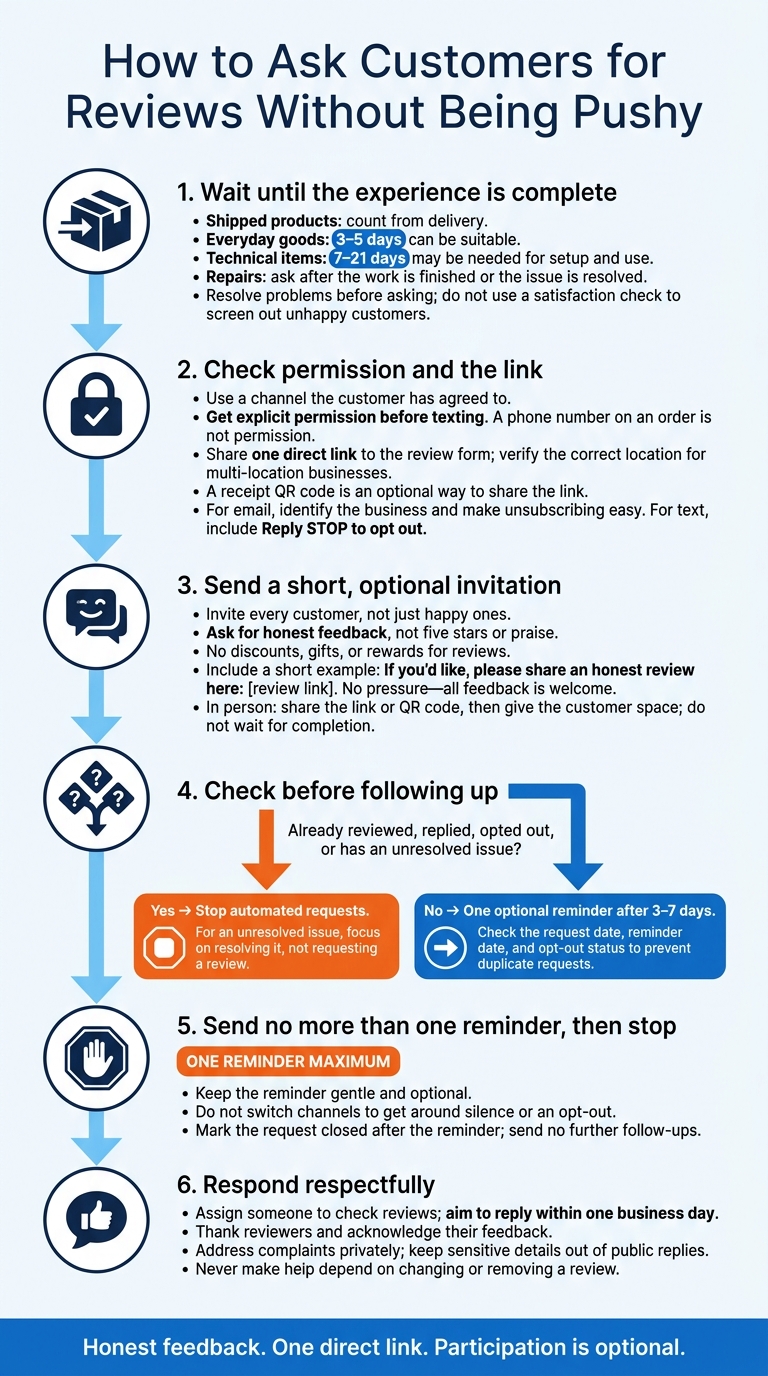
How to Ask Customers for Reviews Without Being Pushy
Step 1: Pick the Right Time and Make Reviews Easy
Ask After a Purchase or Completed Service
For shipped products, count from delivery: 3–5 days can suit everyday goods, while technical items may need 7–21 days for setup and use. For repairs, ask after the work is finished or the issue is resolved.
When the timing is right, make the request easy to complete.
Resolve problems before asking, but send the same review request to every customer – including unhappy ones. Don’t put a satisfaction check between customers and the review link, or offer discounts, gifts, or rewards.
Use the channel the customer has agreed to.
Share One Direct Link With Permission
Send customers straight to the review form, not your homepage. If your business has multiple locations, check that the link opens the right location’s profile. Keep instructions to one sentence, and include a time estimate only if it’s accurate. A QR code on a receipt lets customers open the form whenever they choose.
A phone number on an order isn’t permission to text a review request. Get explicit consent first, give customers a clear way to opt out, and respect refusals. For email, identify your business and make unsubscribing easy.
Use a contact log only to prevent duplicate requests and unwanted follow-ups. Before sending another message, check the request date, reminder date, and opt-out status. Stop automated requests after a review, reply, opt-out, or unresolved issue.
sbb-itb-303bd8e
Step 2: Use Low-Pressure Review Request Scripts
Once you’ve set the timing and review link, keep the request simple and pressure-free.
Ask for honest feedback – not a specific rating. Don’t request five stars, offer incentives, ask for praise, or tell customers exactly what to write.
In Person: Ask, Then Give Space
Share the review link or QR code, then step back. Don’t wait for the customer to finish the review.
Thanks for choosing us today. If you’d like, please share an honest review of your experience. No pressure – your feedback helps us improve.
Email: Keep It Short and Optional
Subject: Would you like to share your experience?
Thank you for visiting [Business Name]. If you’d like to share your experience, get more Google reviews by leaving an honest review here: [review link]. Participation is optional, and all feedback is welcome.
Text: Ask Only With Permission
Send a text only with explicit permission, and honor opt-out requests.
Hi [Name], thanks for choosing [Business Name]. If you’d like to share honest feedback, use this link: [review link]. No pressure – optional.
Reply STOP to opt out.
If a customer doesn’t respond, leave it there. Follow the follow-up limit in the next step.
Step 3: Limit Follow-Ups and Respond With Respect
After your first request, send no more than one follow-up.
Send One Reminder, Then Stop
Wait 3–7 days before sending one gentle reminder. Skip the reminder if the customer has already reviewed, opted out, or reported a problem that hasn’t been resolved.
Gentle reminder: If you’d like to share honest feedback, here’s the link: [review link]. No pressure – thank you either way.
Don’t switch from email to text or another channel to get around silence or an opt-out. Stop after that reminder. Mark the request closed so no more follow-ups go out.
Thank Reviewers and Address Problems
Put someone in charge of checking reviews, and aim to reply within one business day. Thank reviewers for their time and acknowledge the details they shared.
When someone complains, stay calm, apologize where appropriate, and offer to help privately. Keep billing details, account information, and other sensitive details out of public replies. Never make help depend on changing or removing a review.
Don’t offer benefits in exchange for removing criticism or use customer terms to ban honest reviews. The Consumer Review Fairness Act protects honest consumer opinions in covered contracts.
Conclusion: Make Honest Feedback Optional
Ask for feedback after the service is complete or the order is delivered. Share one direct link and ask for honest feedback, not praise. Invite customers regardless of whether they’re happy with their experience.
Send one polite reminder after a few days, then stop. Respect silence, refusals, and opt-outs.
Use one script, track each request, and keep participation optional.
FAQs
How do I ask repeat customers without overdoing it?
Use consistent milestones, such as a completed month or a quarterly check-in, to request reviews. Don’t wait for compliments or the right mood. Give every eligible customer the same invitation.
Keep the message factual: mention how long you’ve worked together, add a direct review link, and make it clear that leaving a review is optional. If you don’t hear back, send one polite follow-up, then stop. Respecting silence keeps the request from feeling pushy.
What if a customer needs help leaving a review?
This process can be tricky, so offer friendly help without pressure. Give clear, step-by-step instructions, and walk them through any complicated parts at their pace.
If they’re still having trouble or would like more help, offer to connect them with your support team. Stay patient and focus on helping them navigate the process – not pushing them to finish. Make it clear that leaving a review is optional.
How can I tell if my review requests are working?
Test same-day versus next-day review requests and compare response rates. Look for patterns in the feedback, such as business process issues, product quality, or praise for your service.
Ask while the experience is still on the customer’s mind, and explain why honest feedback matters to your business. If few customers respond, check your timing and how easy it is to leave a review.